Speed vs Quality in Art: Why Your Workflow Isn’t Working
The Real Reason Your Art Workflow Feels Broken
A lot of artists eventually reach a frustrating point in their process.
The sketch looks promising, the idea feels strong, and the piece seems like it has potential. But somewhere between the early stages and the final rendering, progress slows down. Decisions become harder to make. The painting starts to feel uncertain.
At that moment many artists assume their rendering process is broken.
They start searching for better brushes, new techniques, or more efficient workflows.
But the real problem is usually much simpler.
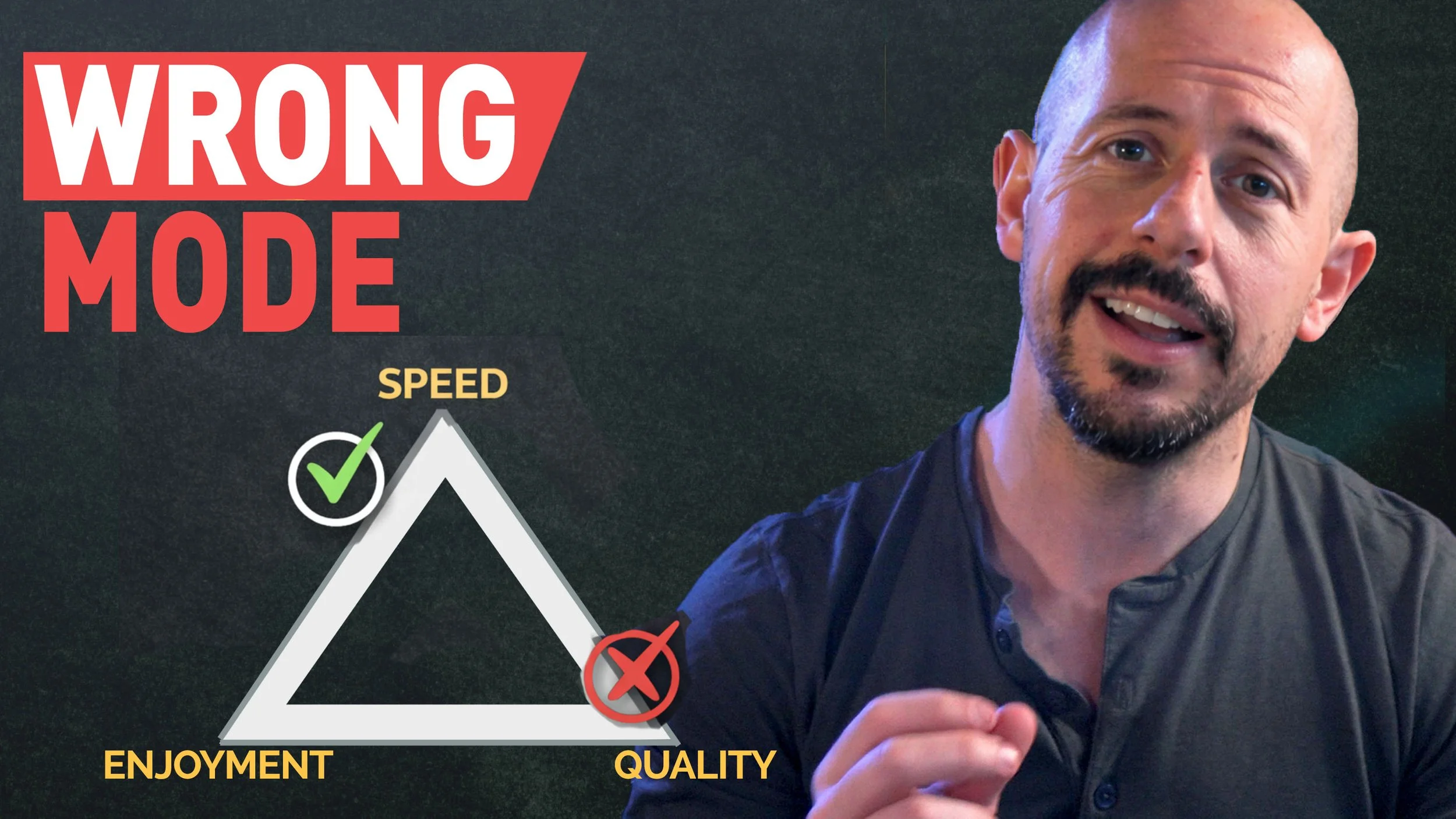
Most artists are trying to use one workflow for three completely different goals.
They want their process to be fast.
They want their work to look highly polished.
And they want the experience to stay enjoyable and creatively fulfilling.
The difficulty is that these three things rarely peak at the same time.
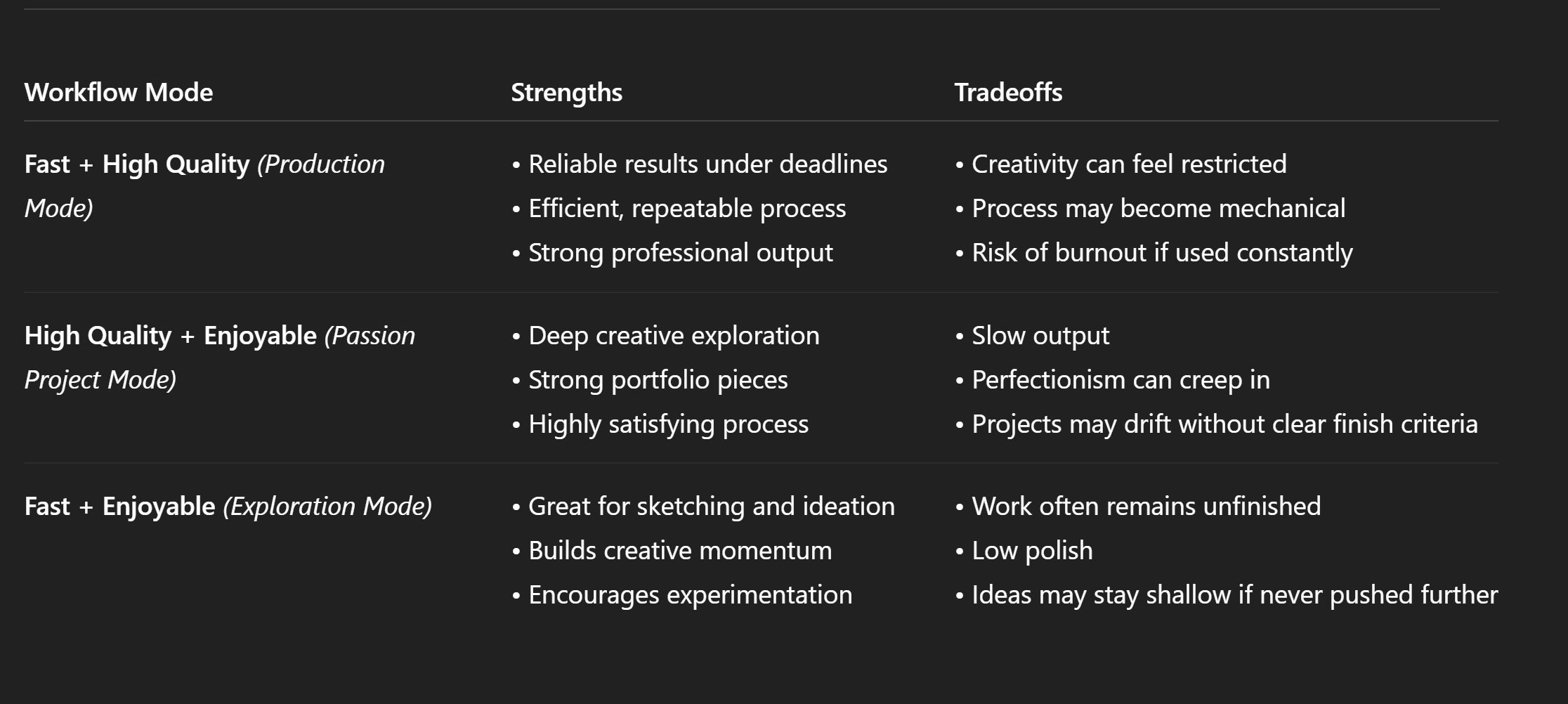
Professional artists eventually realize that different types of work require different modes of working. Some workflows prioritize speed, others focus on craftsmanship, and some exist purely to explore ideas.
Understanding which one you’re using — and why — can completely change how your art process feels.
The Best Workflow Isn’t the Most Efficient One
One of the biggest misconceptions in art education is that there’s a single “best” workflow.
But professional artists don’t actually use one process for everything.
The best workflow isn’t the most efficient one.
It’s the one that matches what you’re trying to get out of the piece you’re working on.
For example:
Some pieces exist to move fast and produce output.
Some pieces exist to demonstrate high-level craftsmanship.
Others exist simply because they’re fun to make.
These goals all demand different approaches.
Trying to force the same workflow onto all of them often creates frustration.
If you're trying to build stronger finished pieces instead of getting stuck in endless sketching, I break down the full environment design workflow in my 1:1 mentorships
The Three Goals Most Artists Are Balancing
When you step back and look at it broadly, most artwork is optimizing for one of three things.
1. Speed
Speed is about output and efficiency.
The goal isn’t perfection.
The goal is forward momentum.
Artists working in this mode usually focus on:
minimizing revisions
committing to decisions quickly
building processes they can repeat reliably
This kind of workflow is common in production environments.
Concept artists, freelancers, and illustrators working with deadlines often rely on structured pipelines that help them move quickly from idea to delivery.
2. Quality and Polish
Quality-focused work is about craftsmanship and refinement.
This is the type of work that usually ends up in portfolios.
Here the focus shifts toward:
precision
detail
thoughtful material rendering
stronger design decisions
These pieces take longer.
But the goal is to represent the artist’s highest level of capability.
3. Enjoyment and Creative Satisfaction
The third goal is something many artists forget to protect.
Enjoyment.
This is the mode where artists experiment, explore ideas, and enter the flow state where time disappears.
It’s often where:
new styles emerge
creative breakthroughs happen
personal voice develops
This kind of work is less about efficiency and more about sustaining a long-term relationship with creativity.
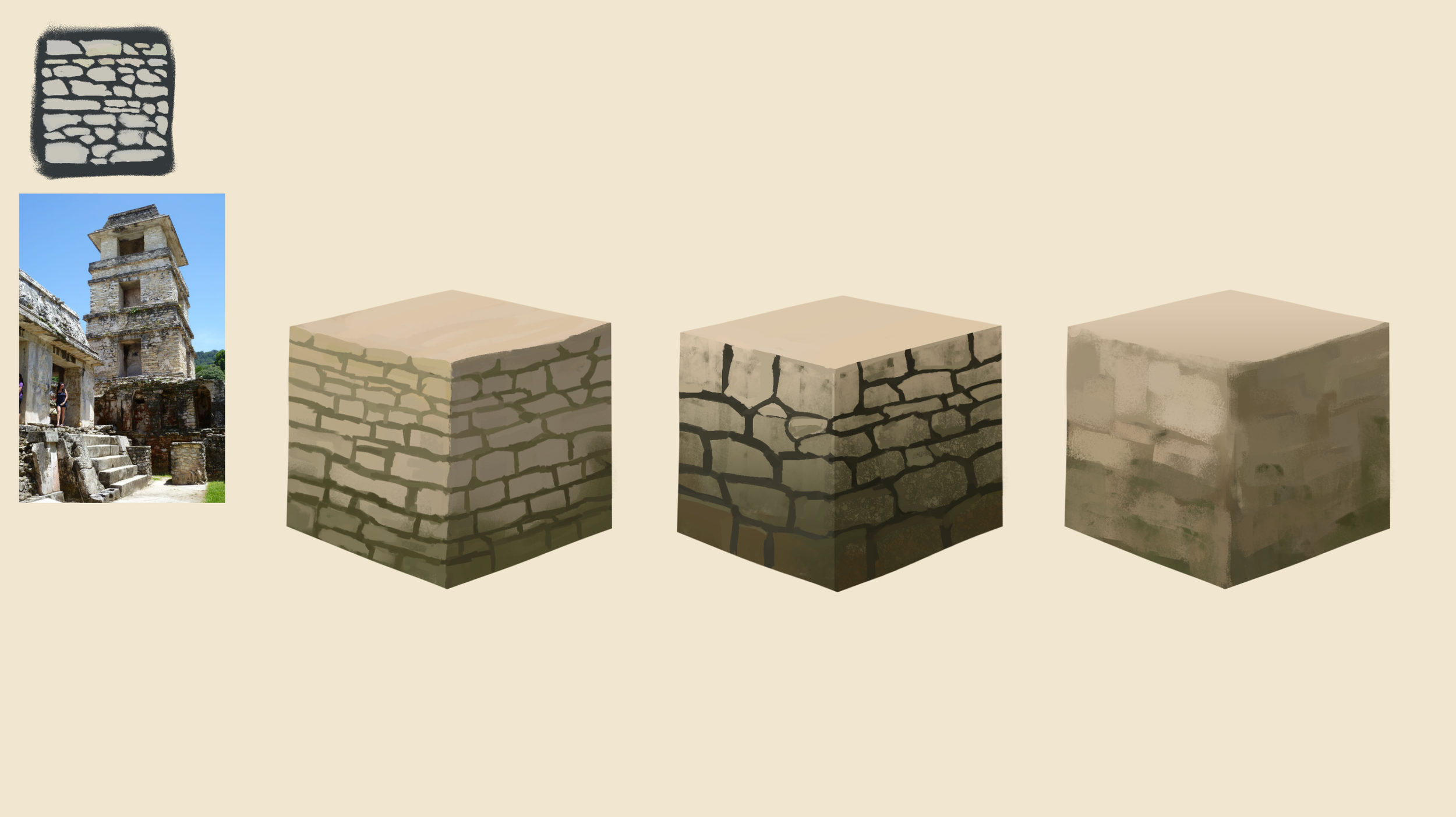
study from our Patron Stefan If you want structured exercises that help move work from exploration into finished pieces, I’ve put together a private learning group with weekly meetings and assignments.
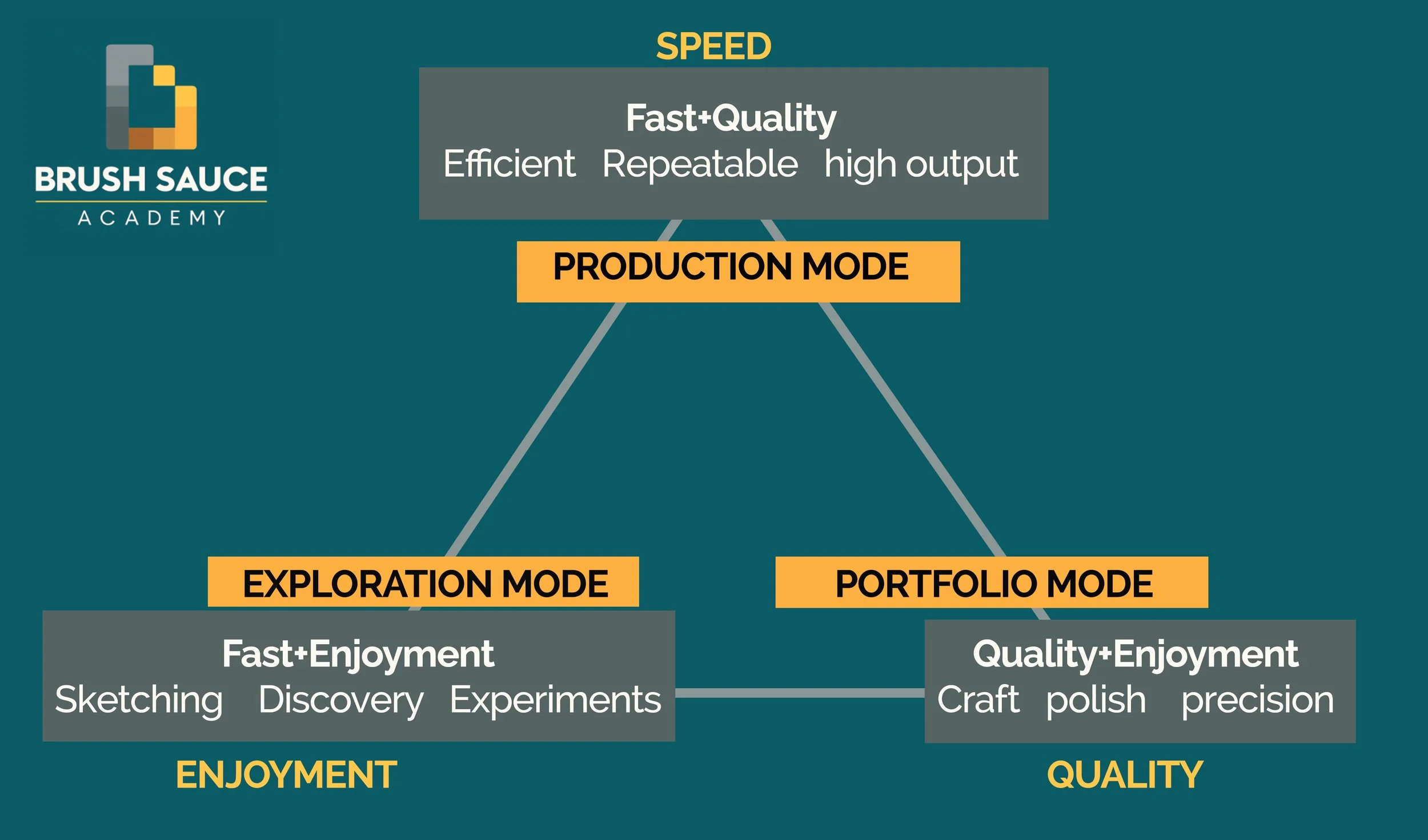
Three Ways Artists Actually Work
How This Affects Rendering
This framework doesn’t just change how artists think about projects.
It also changes how rendering decisions are made.
Rendering techniques that make sense in one mode can feel inefficient or frustrating in another.
For example:
When Speed Is the Priority
Rendering becomes about consolidation and efficiency.
Artists may:
commit to lighting earlier
combine value and color passes
limit the number of brushes used
avoid unnecessary iterations
The goal is for every brush stroke to solve multiple problems at once.
When Quality Is the Priority
The process slows down.
More planning happens before rendering begins.
Artists spend more time on:
reference gathering
redraw passes
material differentiation
focal point refinement
Rendering also becomes more selective.
Important areas receive the most attention, while supporting elements remain simplified.
When Enjoyment Is the Priority
The process becomes more spontaneous.
Artists may work with:
looser sketches
textured brushwork
exploratory marks
evolving compositions
Instead of executing a strict plan, the image develops gradually through interpretation and experimentation.
This approach often produces surprising and expressive results.
But it’s also the least predictable.
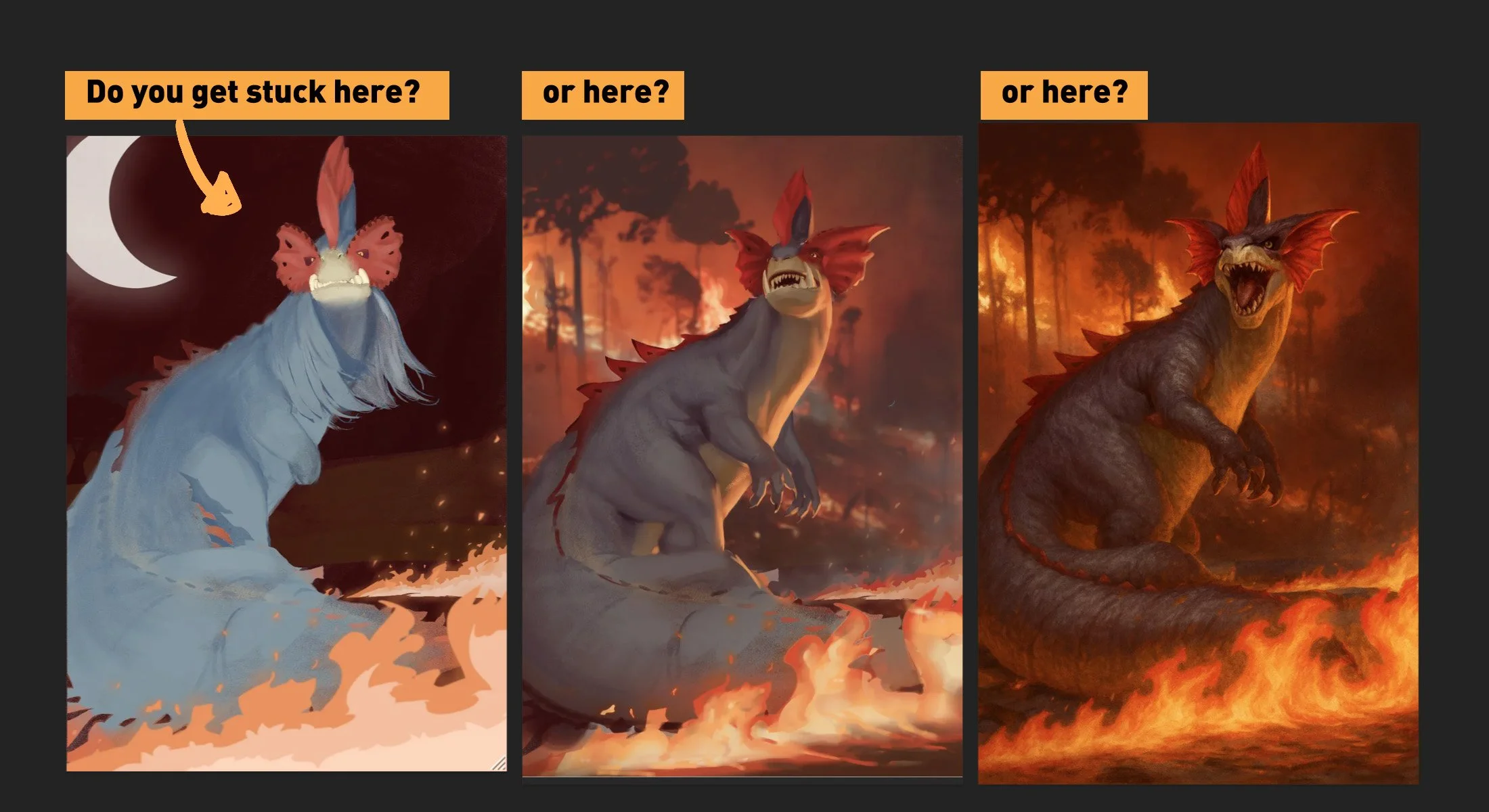
A lot of artists hit a point where they’re doing the work, but they’re not sure why pieces stop progressing.
That’s where outside feedback can be incredibly valuable.
If you'd like help diagnosing what’s holding your work back, I offer courses and mentorships where we break down artwork together and focus on moving ideas all the way to finished pieces.
The Real Question to Ask Before Starting a Piece
A lot of artistic frustration comes from expecting one workflow to do everything.
Speed, beauty, and enjoyment rarely peak at the same time.
So instead of asking:
“What is the best rendering process?”
A more useful question is:
“What is this piece actually for?”
Is it meant to build momentum?
Is it meant to showcase your highest level of craft?
Or is it meant to keep your relationship with art enjoyable and sustainable?
Once that answer becomes clear, choosing the right workflow becomes much easier.
And the process starts to feel far less broken.